6/29/2024
Avoid Chaos on Your Next Trip: Proven Strategies for Digital Nomads
Traveling and working at the same time requires attention to details that we usually overlook. Here are the steps I follow every time I organize my trips.
Table of contents
Being a digital nomad feels like a holiday, but travelling and working at the same time requires paying attention to details we usually overlook.
Having a decent space, good connectivity, and the right tools is just the first part. Here are the steps I follow every time I organise my travels:
1. Choosing the Next Destination
I have pre-classified two types of adventures:
If I'm travelling to a nearby place, for example, a neighbouring country or within the same continent, I start planning where and when to go three weeks in advance.
On the other hand, if I want to travel to the other side of the world, drastically change time zones, or go to a country I know nothing about, I start organising at least six months before travelling.
To find inspiration for the next destination, I look at photos in world travel books such as Lonely Planet or read blogs on the internet about recommended destinations for travel and work. For example:

Once I have my list of potential destinations, I open Google Flights and start playing with dates and countries.
One cool feature of this application is that it allows you to discover new destinations and shows you the prices:
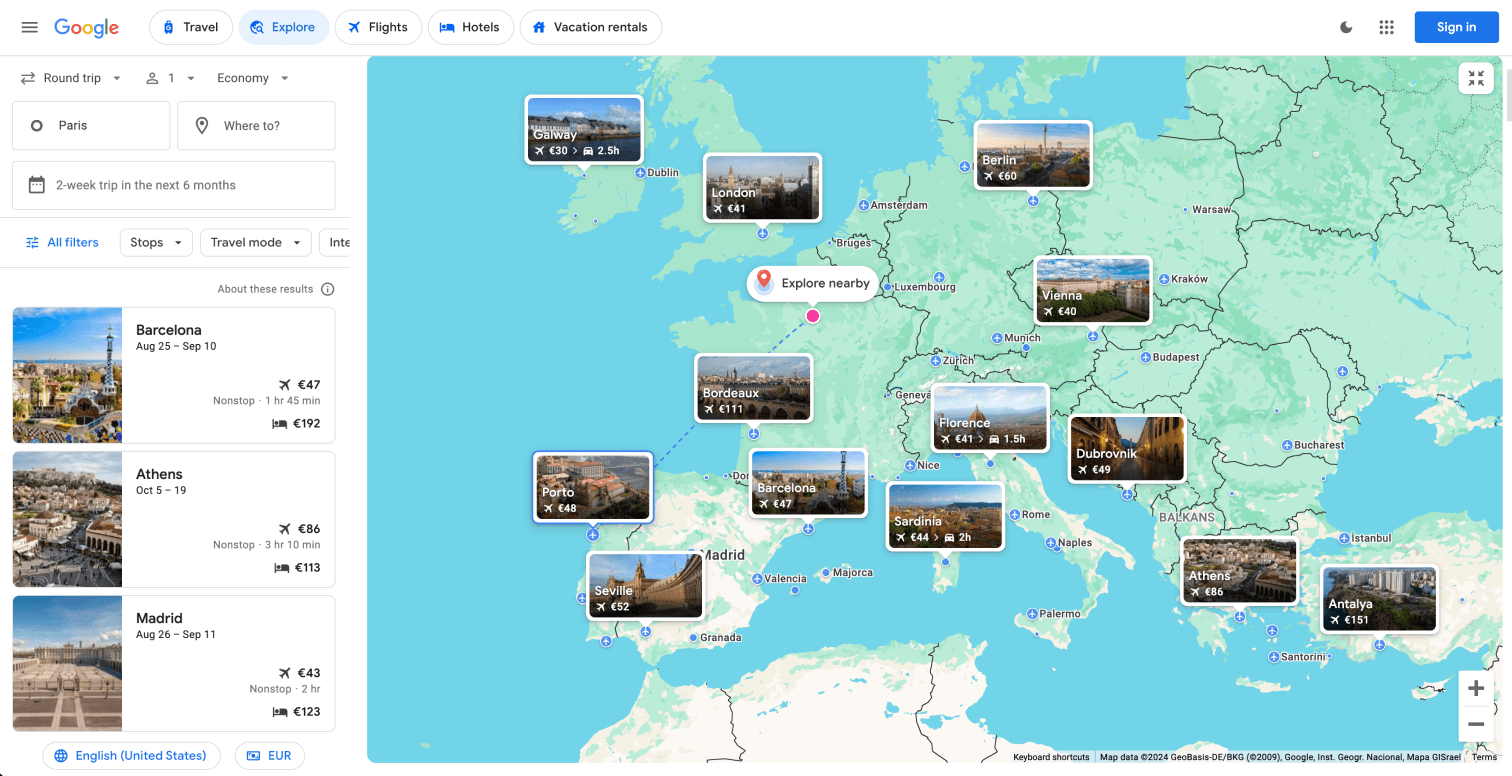
My goal is to get tickets at a reasonable price, avoiding high costs due to seasonality or special dates in the year.
For this, Google also has an indicator named price graph:
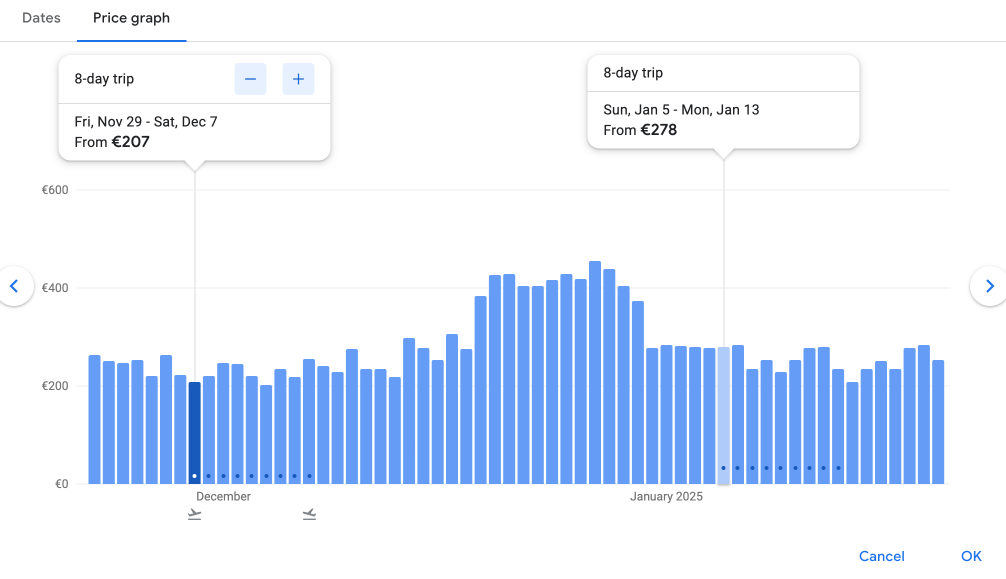
When I find the next city I want to fly to, I start adjusting dates and filters. The ones I commonly use are:
- No connecting flights or at most one.
- If there is a connecting flight, the layover time should not be more than 4 hours.
- The arrival time at the destination should be before 5 pm. I like to have time to settle into a new city and not arrive at night. I've had to find the exact door of my apartment at 2 am with my suitcase in hand in areas that felt unsafe simply because they were unfamiliar.
- For long flights, I try to avoid low-cost airlines, as the initial price is cheap, but adding luggage, food, or a seat usually doesn't compensate for the savings compared to airlines that include all that in the fare.
When I find the right flight, I usually find myself with different purchase options: :
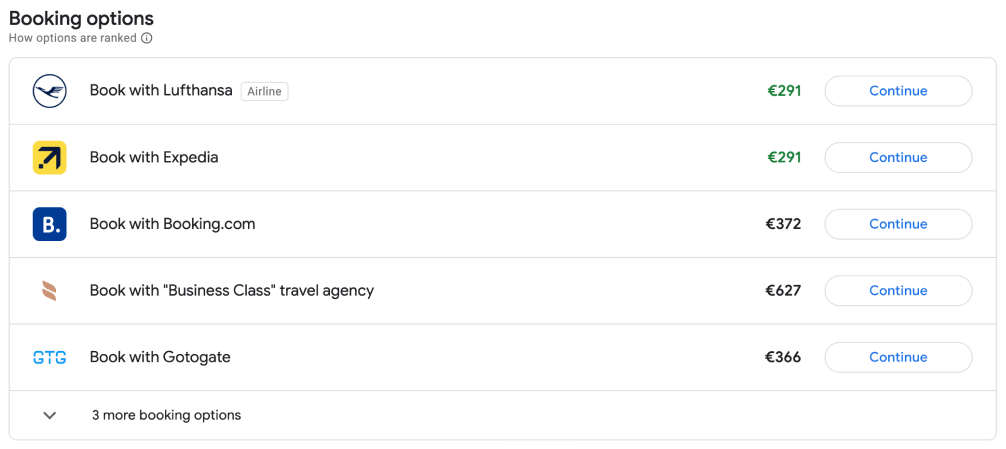
If the price difference is very small, I try to buy directly from the airline.
When it's more than 10%, I choose an alternative platform, assuming the risks such as:
- Unrecognised payment methods
- Delays in issuing tickets
- No possibilities for customisation like seat, luggage, or meals
- Lots of spam on the site trying to sell you insurance or car rentals, etc.
Before making the purchase, I start looking at my accommodation options.
2. Choosing Where to Stay
In the countries where it is available, I always prefer to use Airbnb. There are alternatives; Booking is usually good for holiday stays and, depending on the destination, there are smaller, local platforms.
But accommodation is the most important thing for me in the nomad experience. I always choose platforms that convey trust and have some type of consumer protection if something goes wrong before or during the stay.
Once I have defined the city, I choose date ranges of at least one month. I usually don't rent for less because:
- Accommodations offer substantial discounts if you book long stays.
- Several weeks in the same place allow me to stabilise in a location, establish my routines, and have space to meet locals.
After hitting search, I open another browser tab and start looking at the city map, trying to understand where the attractions I want to see are, the centre, and also parks or green spaces where I can exercise.
My first filters on Airbnb are:
- Zooming in on the areas of the city that interest me the most.
- Choosing entire apartments with at least one bedroom and a kitchen.
- Marking in the amenities section that it has Wi-Fi and a washing machine. If it's summer, I also add air conditioning. In winter areas, it must have heating with temperature control from the apartment.
- If after these filters the prices are reasonable, I also mark the "Guest Favourite" filter. This ensures it has many good reviews.
When the first results appear, I start looking at the photos and filtering the options with the following criteria:
- Spacious apartments over mini apartments.
- Lots of windows and natural light. (I discard all those that only have nighttime photos with the lights on, as sometimes they do that to hide that it's a cave during the day).
- A comfortable kitchen, ideally showing a photo with an oven and basic cooking utensils.
- It needs to have a comfortable workspace, not necessarily with a dedicated desk, but I do pay attention to how ergonomic it could be if I'm sitting there for 8 hours. It's very difficult to find spaces equipped with this in mind. The few I found with a desk and chair dedicated to working were equipped based on aesthetics and design, not usability. No one offers a desk with standard height and an ergonomic office chair.
- I also evaluate the furniture, I usually discard all apartments that still have granny's furniture and a mix of old stuff, because in my experience I end up having problems with uncomfortable beds, broken chairs, tiny 20-year-old TVs, or rock-hard sofas.
With the remaining options, I thoroughly check the reviews. I sort them from worst to best and read what happened:
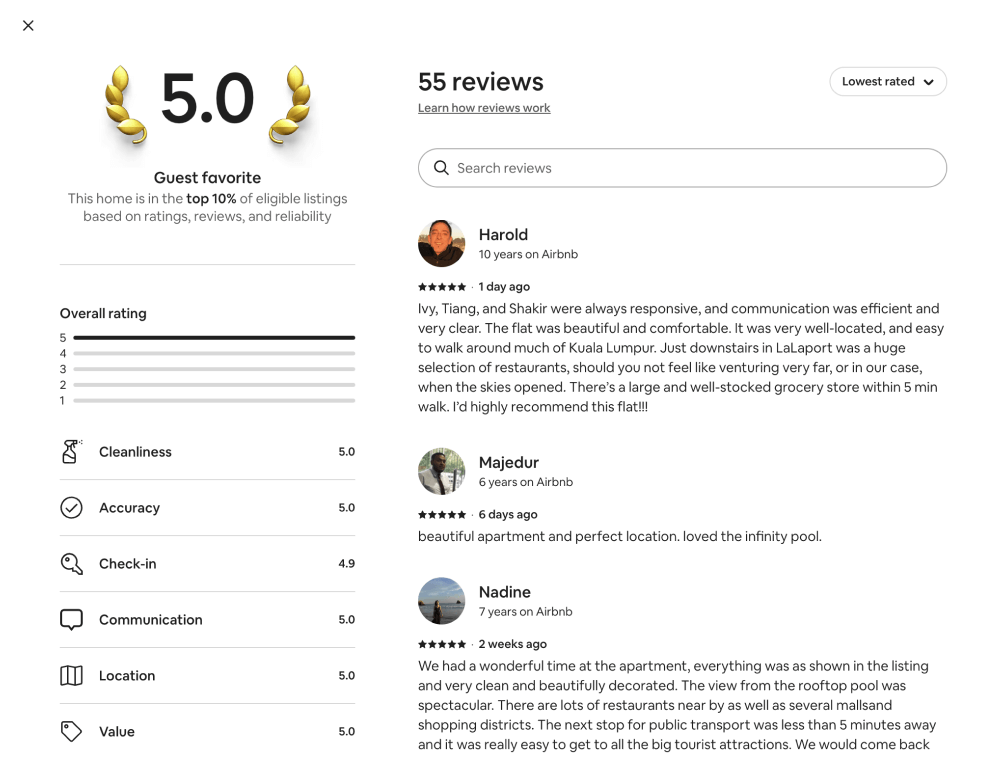
It's very important to read the most recent reviews as well; they often contain information about current problems in the apartment, such as damage, nearby construction, or things that appeared in the photos but weren't there.
The next step is to write to each host and ask about the internet connection speed and technology. Special attention must be paid to this because often the host doesn't know the actual speed and tells you the speed contracted with their provider, but it's crucial to have an exact measurement in the apartment, because depending on the country and geographic area, they may have contracted 20 Mbps or 50 Mbps, but the actual speed is less than 5 Mbps download and 500 Kbps upload.
As a minimum, to work decently, it should have 25 Mbps download and at least 6 Mbps upload.
Many hosts have no problem sending you a screenshot showing the actual speed measured there.
Lastly, if I see that the stay will be long and the discount isn't significant, I usually ask for additional discounts. Most of the time they offer it without issue.
3. Choosing What to Do
With flights and accommodation sorted, comes the most fun part. For weeks, I start reading blogs, watching videos, and searching for information about what I can visit at my next destination.
I try to find a balance between tourist attractions and local spots like markets, ports, and parks.
Above all, I pay attention to options that require booking well in advance, to buy tickets in advance and not miss out.
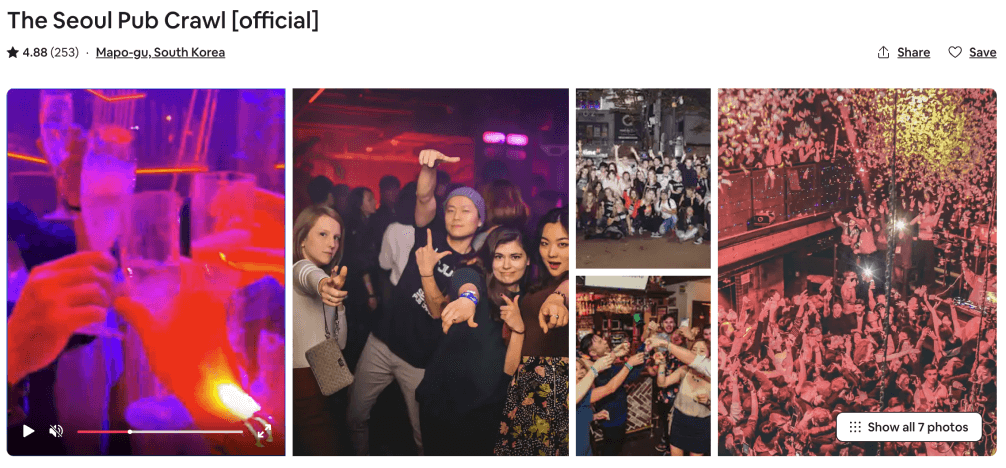
Free walking tours are often one of the best experiences for the first few days after arriving. You connect with fellow travellers, get an idea of different parts of the city, learn history, and sometimes end up partying!
4. Health and Insurance
I've rarely had to use insurance during a trip. But when something has happened, I've always been glad to have it.
At a minimum, travel insurance is essential for the countries you visit that don't have a healthcare agreement with your home country.
In recent years of travelling, I've stopped relying on the insurance provided by my credit cards and decided to go with Hey Mondo.
I always look for information on coverage and plans before travelling. Coverage changes significantly if you try to cover yourself once you're already on the road.
The types of insurance I contracted were always medical. If my trip is to a single destination that I'll visit and then return home, I buy coverage for that country. But if I plan to travel for several months, I purchase the annual plan that covers "worldwide". This way, I can have the flexibility to choose destinations without worrying about this again.
I've recommended it to many friends and family (I have no promotional agreement with them, I'm just a satisfied customer).
I've never had problems with coverage.
In general, I've experienced 3 types of incidents in recent years:
- Ophthalmological coverage, which required an urgent consultation, which I paid for at the time and they refunded the money within a few weeks.
- Non-urgent medical coverage: I caught COVID twice and had to get blood tests, lung X-rays, and buy medication. In these cases, the coverage was total without having to pay anything upfront.
- Luggage delay: In some coverage plans, they offer additional coverage for delayed flights or lost luggage. On my return from Costa Rica, my suitcase never arrived and they covered the purchase of clothes for about 200 euros during the two days until I got my suitcase back.
An additional detail, the insurance for theft or loss is also in addition to medical coverage, but when I asked how it works, in all cases they told me that whatever I claim must be less than 2 years old and I must have the original purchase receipt. Something I haven't always kept.
Vaccines and Medication: Find out if the destination requires specific vaccines or if it's advisable to take certain medications. Consult a doctor for personalised advice.
Additionally, as I assume most people do, I carry a small first aid kit with some basic items and some over-the-counter (or not) medications to have on hand for minor ailments: headaches, food poisoning, or a passing cold.
5. Financial Planning
I have friends who plan specifically what they're going to spend on and a daily budget for food, accommodation, flights, etc.
In my case, I'm fortunate to be a very disciplined person, and regardless of where I am, I try to live a balanced and frugal life. So, I don't do this anymore.
But I understand the benefits for those travellers tempted to buy every "Chinese" trinket that appears in any city in the world and seems unique to that place.

Currency Exchange and Bank Fees
If you have a digital bank, you can probably have accounts in the currency of the destination country you visit, or exchange between currencies online at low cost. For example, Revolut
But if you don't have this, it's essential to consider that your credit or debit cards may not work or be costly to use due to fees for each transaction.
Research this well before travelling, and if necessary, carry some cash in local currency before boarding the plane.
When I need to exchange currency, I usually use an app called XE currency converter to monitor the market rate and see if I'm being offered a reasonable price or being scammed.
I learned this the hard way; I got scammed in Florence, Italy, and also in London, UK.
6. Visas and Entry Permits
Check if the destination country requires a visa and if there are rules you must follow as a tourist. For example, not working during your stay, or proving sufficient income to cover your holiday period.
Some countries, like China, require you to pre-purchase flights and all accommodation and internal transport before entering the country.
Others, like the UK or USA, may ask you to prove you have a certain amount of money in a bank account, a return ticket, and booked accommodation.
7. Technology and Connectivity
It's common to imagine that upon arriving at your destination you can buy a local SIM at a good price. But the reality is that many shops at airports take advantage of this and offer limited, expensive plans that often require using a physical SIM in your phone.
Additionally, as soon as we land, the anxiety makes us try to connect via roaming to notify someone that we arrived safely or coordinate with hotels or car rentals for the day ahead.
I've tried two types of services to solve this in all my travels:
- Google FI: On a trip to the USA, I bought a SIM card from them (now it's e-SIM) and for a low monthly fee, for 4 years I had roaming in all the countries I visited worldwide at a very low cost. It also allowed me to have a phone number that could make or receive calls anywhere. A few months ago they cut my roaming, claiming the service is exclusive for American residents who return to the country and don't spend all their time travelling.
- Nomad or Airalo: Both apps allow you to buy an e-SIM with internet only, which will work from the moment you land. They have plans for a single country, a geographic area, continent, and worldwide. The prices are reasonable, and the coverage is excellent.
At the airport, while waiting for luggage, I usually check if my new internet connection has decent speed and serves as a backup for working if the accommodation's internet fails.
I use Speed Test
I repeat this test as soon as I connect to the apartment's Wi-Fi, and in cases where my reading doesn't match the evidence sent during the booking process, I've filed complaints and even decided to cancel the stay and look for another. Don't underestimate how important this is for your peace of mind during the trip.
I also use a VPN service on my laptop; I only recommend this for travellers who need to work or access sensitive information in the countries they visit. The reality is that more countries lack free internet than those that do, so many times, in airports or cafes with low-security Wi-Fi networks, I only browse with my VPN on.
The one I chose is NordVPN
Now, Time to Travel!
When planning your next trip as a digital nomad, remember these essential strategies to avoid chaos and ensure a pleasant and productive experience.
Anticipation and proper preparation for destinations, accommodation, connectivity, and medical emergencies are fundamental.
Avoiding common mistakes such as lack of early planning, not verifying internet connectivity, or underestimating the importance of travel insurance can make the difference between a successful trip and one full of setbacks.
I hope you enjoy your adventures without worries, always maintaining a balance between work and tourism. Are you ready for your next nomadic adventure?
If you liked this content and want to receive future posts directly in your inbox, subscribe to the newsletter. No SPAM, no commercial actions.